Puerto Vallarta is one of the easiest beach cities in Mexico to explore without renting a car. Local buses run through the main tourist areas, connect the airport with the Hotel Zone and downtown, and reach beach communities south of town such as Mismaloya and Boca de Tomatlán.
The system is useful, cheap, and frequent, but it is not always obvious to first-time visitors. Routes are often identified by the words painted or displayed on the front windshield rather than by a simple tourist map. Stops can be informal, fares are paid onboard, and some routes require a transfer at common bus hubs such as Walmart/Sam’s Club or the Romantic Zone.
As of April 1, 2026, the standard public bus fare in Jalisco is 11 pesos per ride, according to local reporting on the statewide fare change. The same report said the fare applies whether or not a rider has the state transit card, while students have a lower preferential fare.
How Puerto Vallarta buses work
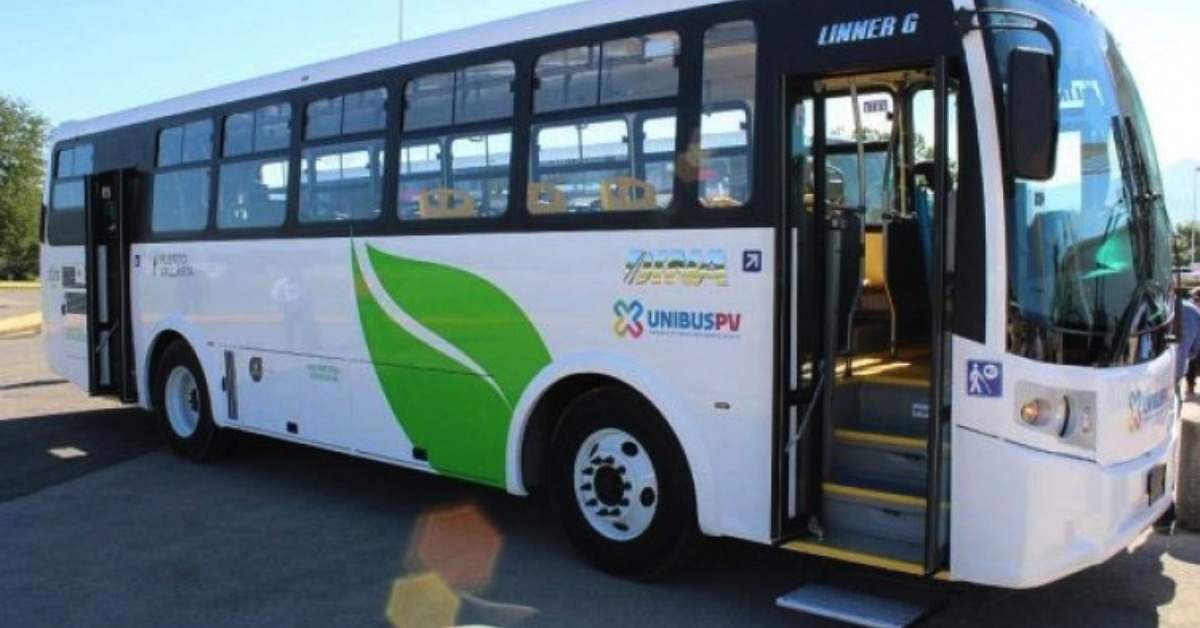
Puerto Vallarta buses are local city buses, not tourist shuttles. They are used by residents, workers, students, and visitors. Most buses follow regular routes through the city’s main corridors, including Boulevard Francisco Medina Ascencio, downtown Puerto Vallarta, the Hotel Zone, Marina Vallarta, Pitillal, Ixtapa, Mismaloya, and Boca de Tomatlán.
For visitors, the most important thing to understand is that the destination sign matters more than the bus color. Look for words such as:
| Bus sign | Useful for |
|---|---|
| Centro | Downtown, Malecón, Centro, sometimes onward toward Zona Romántica |
| Túnel | Faster route to Zona Romántica that bypasses much of downtown |
| Marina | Marina Vallarta and nearby hotels |
| Walmart / Sam’s | Maritime Terminal area, transfer point for buses north |
| Aeropuerto | Puerto Vallarta airport |
| Mismaloya / Boca | South coast beaches, Mismaloya, Boca de Tomatlán |
| El Tuito / Jardín Botánico | Vallarta Botanical Garden and El Tuito |
| Nuevo Vallarta / Bucerías / Sayulita / Punta Mita | Routes north into Nayarit, usually from the Walmart/Sam’s area or airport corridor |
Puerto Vallarta’s local route information is also listed on route-planning sites such as Rutas Vallarta, which says it covers routes through central Puerto Vallarta, surrounding neighborhoods, and parts of Bahía de Banderas. It lists major trunk routes including T01, T02 Centro, and T02 Túnel. Moovit also lists Puerto Vallarta bus lines and says it tracks routes, stops, schedules, and service updates in the app.
How much does the bus cost?
For regular city routes, plan on paying 11 pesos per ride. Bring coins or small bills. Drivers may not have change for larger bills, and paying quickly helps keep boarding moving.
Each fare is normally for one ride only. Older visitor guidance from Visit Vallarta notes that fares are one-time use, there are no round-trip fares, and riders should keep their ticket because inspectors may check it.
For longer routes outside the main city area, such as El Tuito, the Botanical Garden, Bucerías, Sayulita, San Pancho, Punta Mita, or other Nayarit destinations, expect a higher fare. Ask the driver before boarding: “¿Cuánto cuesta a Sayulita?” or “¿Cuánto cuesta al Jardín Botánico?”
How to pay
Pay the driver when you board. Enter through the front door, say your destination if needed, hand over the fare, and take the small paper ticket if one is given.
Useful Spanish:
| English | Spanish |
|---|---|
| How much to downtown? | ¿Cuánto cuesta al centro? |
| Does this go to the Malecón? | ¿Va al Malecón? |
| Does this go to Zona Romántica? | ¿Va a la Zona Romántica? |
| Please tell me when we arrive. | ¿Me avisa cuando lleguemos, por favor? |
| I’m getting off here. | Bajo aquí. |
| Stop, please. | Baja, por favor. |
Where to board the bus
Look for bus stop signs marked Parada, groups of people waiting near a corner, or obvious bus shelters. On busy roads such as Francisco Medina Ascencio, buses usually stop at designated areas. In older parts of town, stops can feel less formal.
The most useful boarding areas for visitors are:
Airport area
If you are traveling light, the bus can be the cheapest way to leave the airport. The public bus stops are outside the terminal area near the pedestrian bridge. For southbound buses into the Hotel Zone, Centro, or Zona Romántica, look for buses marked Centro, Túnel, or a destination near your hotel. Several travel guides note that the airport bus stops are near the pedestrian bridge and that tickets are purchased directly on board.
Avoid this option if you have large luggage, mobility concerns, or arrive late at night. In those cases, a taxi, hotel transfer, or ride-share from outside the airport zone may be easier.
Hotel Zone
From the Hotel Zone, buses running south along Francisco Medina Ascencio can take you to Centro, the Malecón, and Zona Romántica. Look for buses marked Centro if you want to go downtown or to the Malecón. A bus marked Túnel bypasses much of downtown and is better if you are heading to the Romantic Zone rather than strolling the Malecón.
Centro and the Malecón
Buses do not usually run directly on the pedestrian Malecón itself. Walk a few blocks inland to catch buses moving north or south. For hotels in the Hotel Zone, Marina, airport area, or Walmart/Sam’s Club, look for northbound buses marked with those destinations.
Zona Romántica
Zona Romántica is a key transfer area for south-coast buses. For Mismaloya and Boca de Tomatlán, visitor route guidance commonly points riders to the orange-and-white buses near Basilio Badillo and Constitución. These buses continue south along the coast and stop in areas such as Conchas Chinas, Mismaloya, and Boca de Tomatlán.
Walmart and Sam’s Club
The Walmart/Sam’s Club area across from the Maritime Terminal is one of the most important bus hubs in Puerto Vallarta. It is useful for transfers to Nuevo Vallarta, Bucerías, La Cruz de Huanacaxtle, Sayulita, San Pancho, and Punta Mita. Visit Vallarta’s route guide also identifies this area as a common transfer point for buses heading north into Nayarit.
Key routes visitors should know
Airport to Hotel Zone, Centro, or Zona Romántica
From the airport, look for a southbound bus marked “Centro” or “Túnel”.
Take Centro if you are going to the Hotel Zone, 5 de Diciembre, Centro, or the Malecón. Take the Túnel if you are going to the Zona Romántica and do not need to pass through the downtown waterfront area.
Ask the driver before boarding if you are unsure: “¿Va al centro?” or “¿Va a la Zona Romántica?”
Hotel Zone to the Malecón
From the Hotel Zone, board a southbound bus marked Centro. Get off when the bus reaches downtown, then walk toward the ocean and the Malecón.
Hotel Zone to Zona Romántica
Take a bus marked Túnel for a more direct ride to Zona Romántica, or take Centro if you want to pass through downtown first.
Centro or Zona Romántica to Marina Vallarta
From Centro or Zona Romántica, walk inland to a northbound route and look for a bus marked Marina, Marriott, Westin, or another Marina-area destination. Some buses only pass near the Marina entrance, while others go deeper into Marina Vallarta, so ask the driver if you are headed to a specific hotel or restaurant.
Centro or Zona Romántica to Mismaloya
From the Romantic Zone, take a southbound bus marked Mismaloya or Boca. These buses travel along the coastal highway south of town. They are useful for Conchas Chinas, Playa Palmares, Garza Blanca, Mismaloya, the Vallarta Zoo area, and Boca de Tomatlán.
Centro or Zona Romántica to Boca de Tomatlán
Use the same southbound Mismaloya / Boca bus from Zona Romántica. Boca de Tomatlán is the endpoint for many travelers taking water taxis to Las Ánimas, Quimixto, Majahuitas, and Yelapa.
Puerto Vallarta to the Botanical Garden
Look for buses marked El Tuito or Jardín Botánico. These usually depart from the Romantic Zone, commonly around the Aguacate/V. Carranza/Basilio Badillo corridor, depending on current operations. Because this is a longer route outside the central city area, confirm both the destination and fare before boarding.
Puerto Vallarta to Nuevo Vallarta, Bucerías, Sayulita, or Punta Mita
For destinations north of Puerto Vallarta, use the Walmart/Sam’s Club transfer area or the airport highway corridor. Buses may be marked with Nuevo Vallarta, Bucerías, Sayulita, Compostela, Punta Mita, or ATM.
These are not the same as ordinary city routes, and fares are higher than the standard city bus fare. Confirm the destination before boarding, especially if you are going to a specific resort area in Nuevo Vallarta or Flamingos.
Centro vs. Túnel: the sign that confuses visitors
One of the most common mistakes visitors make is taking the right general direction but the wrong downtown route.
A bus marked Centro usually passes through or near downtown Puerto Vallarta. This is the better option if you want the Malecón, the Church of Our Lady of Guadalupe, downtown restaurants, shops, galleries, or the 5 de Diciembre area.
A bus marked Túnel uses the tunnel route and skips much of the downtown waterfront. It is often faster if your goal is Zona Romántica, but it is not the best choice if you want to get off along the Malecón.
Tips for riding the bus in Puerto Vallarta
Carry coins and small bills. The bus is inexpensive, but a 500-peso bill will make boarding difficult.
Know your landmark. Instead of relying only on an address, know the nearest landmark, hotel, beach, plaza, or cross street.
Follow your route on your phone. Google Maps, Moovit, and Rutas Vallarta can help, but route data may not always match what happens on the street.
Sit or hold on quickly. Drivers often pull away as soon as passengers board.
Keep your ticket. Inspectors may ask to see it.
Avoid rush-hour stress when possible. Buses can be crowded during commuter times, especially along Medina Ascencio and through downtown.
Ask before boarding. A simple “¿Va a ___?” solves most route confusion.
Do not expect air conditioning. Some newer units are more comfortable, but many local buses are basic.
Use the bus during the day first. Once you understand the route, evening rides are easier. For late-night trips, taxis or ride-share may be more practical.
When the bus is better than renting a car
The bus is a good choice if you are staying in the Hotel Zone, Centro, 5 de Diciembre, Zona Romántica, Marina Vallarta, or near the airport corridor. Parking can be limited in downtown and Zona Romántica, and traffic can slow down around rush hour, holidays, and major events.
For many visitors, the bus works best for simple point-to-point trips:
Hotel Zone to Malecón
Centro to Marina
Zona Romántica to Mismaloya
Zona Romántica to Boca de Tomatlán
Airport to Hotel Zone or Centro
Walmart/Sam’s to Bucerías or Sayulita
A rental car may still be useful for multi-stop day trips, remote beaches, mountain towns, or travelers who do not want to manage transfers. But for everyday movement inside Puerto Vallarta, buses can cover much of what visitors need.
Quick visitor cheat sheet
Standard city fare: 11 pesos
Payment: Cash onboard, preferably coins or small bills
Transfers: Usually no free transfers
Best route clue: Destination written on the windshield
Most useful signs: Centro, Túnel, Marina, Aeropuerto, Walmart, Mismaloya, Boca
Best transfer hub north: Walmart/Sam’s Club near the Maritime Terminal
Best transfer area south: Zona Romántica
Best airport tip: Travel light and use the stop near the pedestrian bridge
Best safety tip: Follow your route on your phone and ask the driver before boarding
Puerto Vallarta’s buses are not designed like a polished tourist shuttle system, but they are one of the most useful ways to get around the city. Once you understand the windshield signs, the main transfer points, and the difference between Centro and Túnel, the system becomes much easier.
For visitors who want to save money, avoid parking, and move between the airport, Hotel Zone, downtown, Zona Romántica, Marina Vallarta, Mismaloya, and Boca de Tomatlán, the bus is often the most practical option in Puerto Vallarta.