Puerto Vallarta safety concerns often get flattened into one phrase: Mexico crime.
The better read is narrower and more useful. Puerto Vallarta sits inside Jalisco, a state under a U.S. “Reconsider Travel” advisory due to terrorism, crime, and kidnapping, yet the same guidance lists no specific travel restrictions for Puerto Vallarta or neighboring Riviera Nayarit. The city also recorded a sharp shift in public feeling this year. In INEGI’s March 2026 urban safety survey, 59.9 percent of adults in Puerto Vallarta said they considered the city unsafe, up from 32 percent in December 2025.
That split explains the real picture. Puerto Vallarta is not lawless, nor is it a bubble. The most common problems are petty theft, ATM and card fraud, nightlife overcharging, drink-spiking risks, rough surf, and occasional contact with authorities that can confuse anyone unfamiliar with local procedures. Serious violence makes headlines, but most daily risk comes from ordinary decisions made late at night, around cash, on the road, or near the water.
The safety map is not the same everywhere
Jalisco’s security warning covers a large and varied state. It includes remote highways, border areas near Michoacán, the Guadalajara metro area, mountain towns, coastal communities, and Puerto Vallarta. Treating all those places as a single risk zone leads to poor judgment in both directions.
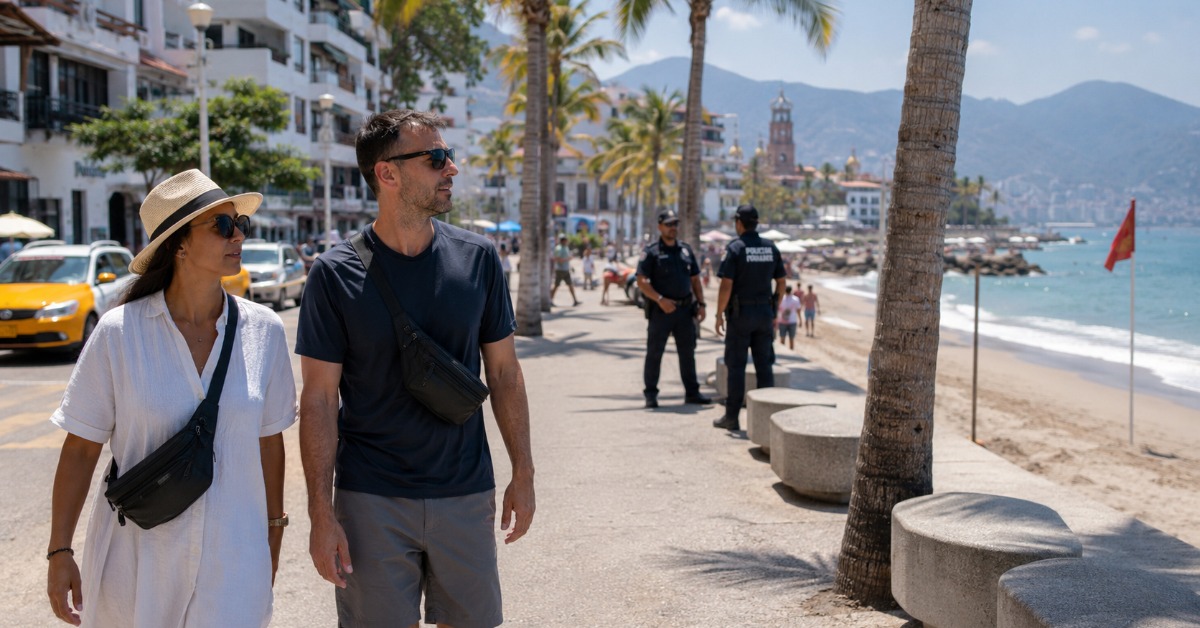
Puerto Vallarta’s busiest areas, including the hotel zone, Centro, the Malecón, Marina Vallarta, and much of the Romantic Zone, have a visible police and tourism presence. That does not remove risk. Crowds, alcohol, cash, phones, beach bags, and late-night transportation create easy openings for theft and scams.
Neighborhood context also matters. A quiet residential street may feel safer than a packed bar district, but poor lighting, empty sidewalks, and unfamiliar routes can change the risk quickly. The smart habit is simple: make decisions based on time of day, distance, lighting, transport, and cash, not on a neighborhood’s reputation alone.
Petty theft usually starts with distraction
Theft in Puerto Vallarta often seems boring until it turns out to be expensive. A phone left on a restaurant table, a purse on a chair, a backpack on the beach, or a wallet in a back pocket can disappear in seconds. Busy sidewalks, buses, bars, beach clubs, and convenience stores are the usual pressure points.
Rental cars add another weak spot. Bags left inside a vehicle, even hidden in the trunk, can draw attention. A parked car near a beach access, overlook, or trailhead should look empty from the outside. Keep passports and immigration documents secured, and carry only what you need for the day.
Cash creates its own risks. Use ATMs inside banks, supermarkets, or malls when possible, preferably during daylight hours. Cover the keypad, avoid large withdrawals, and watch anyone who appears too interested in your transaction. Card fraud can happen when a card leaves your sight, so keep control of it at bars and restaurants.
Nightlife needs a firmer line
Most nights out in Puerto Vallarta end normally. Trouble tends to start when the bill, the drink, or the ride home gets loose.
Overcharging is one of the most common complaints in bar districts. Confirm prices before ordering, avoid leaving tabs open, and check the bill before handing over a card. A dispute at 1 a.m. is harder to manage than a clear price at 9 p.m.
Drink safety deserves the same attention. Do not leave a drink unattended, and be careful with drinks handed over by someone you have just met. Sealed bottles or cans are safer in places where service feels chaotic. Anyone who suddenly feels unusually confused, weak, sick, or blacked out after drinking should get medical help and leave with someone trusted.
Transportation and police contact can be confusing
Getting around Puerto Vallarta is usually easy, but late-night transportation should be planned before leaving the bar or restaurant. Use authorized taxis, established ride services, or a vehicle arranged by a hotel, restaurant, or trusted host. Unmarked cars and street offers near nightlife areas are not worth the savings.
Drivers should be ready for checkpoints, traffic stops, and unfamiliar enforcement habits. Stay calm, keep your hands visible, and cooperate without acting aggressively. If an officer says a traffic fine is owed, ask for the written ticket, the officer’s identification, and where to pay the fine. Do not hand over a passport or pay cash on the roadside.
A real emergency is different. If someone is being threatened, injured, followed, or trapped, call 911 first. Puerto Vallarta also publishes local contacts for municipal police, transit, civil protection, firefighters, and visitor legal assistance. Saving those numbers before they are needed is far better than searching under stress.
The beach is not harmless scenery
Puerto Vallarta’s ocean risk is easy to underestimate because many beaches look calm from shore. Conditions can change with tides, storms, runoff, and afternoon winds. Rip currents, shore break, rocks, and boat traffic are all part of the safety picture.
Swim where other people are swimming, and pay attention to flags or lifeguard instructions when they are present. A red flag means stay out of the water. After heavy rain, avoid river mouths and areas with murky runoff, where debris and contamination can be a problem.
Crocodile warning signs also deserve respect near estuaries, canals, lagoons, and some beach-edge waterways. These are not photo props. Keep dogs away from those areas, stay back from the waterline, and do not walk along dark lagoon edges at night.
Road trips change the risk profile
The safety calculation changes once a trip leaves the city. Mountain roads, rural highways, and long drives after dark bring different concerns than a walk along the Malecón. Toll roads, daylight travel, and planned fuel stops reduce avoidable problems.
Before a road trip to Guadalajara, Mascota, San Sebastián del Oeste, or the wider coast, check current advisories and local reports. A route that was normal last month may be affected by roadwork, storms, security operations, or roadblocks. Keep the tank above half, avoid isolated stops, and let someone know the route and expected arrival time.
After a theft, assault or extortion attempt, speed matters
Anyone who needs police, an ambulance, or firefighters should call 911. A crime report usually requires going in person to the state prosecutor’s office, known as the Ministerio Público. Without a formal complaint, an investigation may not move forward.
A stolen passport or serious crime should also be reported to the relevant consular office. Puerto Vallarta has local consular agency contacts for several countries, and the closest full consular services may be in Guadalajara or Mexico City, depending on nationality.
Documentation helps. Write down names, badge numbers, patrol car numbers, taxi numbers, license plates, locations, and times as soon as possible. Screenshots, receipts, and bank alerts can also help support a report. The goal is not to panic; it is to preserve details while they are still fresh.