The Puerto Vallarta Malecón is one of the easiest places in the city to enjoy without much planning. You do not need a reservation, a tour guide, or a large budget. You only need comfortable shoes, a little time, and the good sense to go when the day begins to cool.
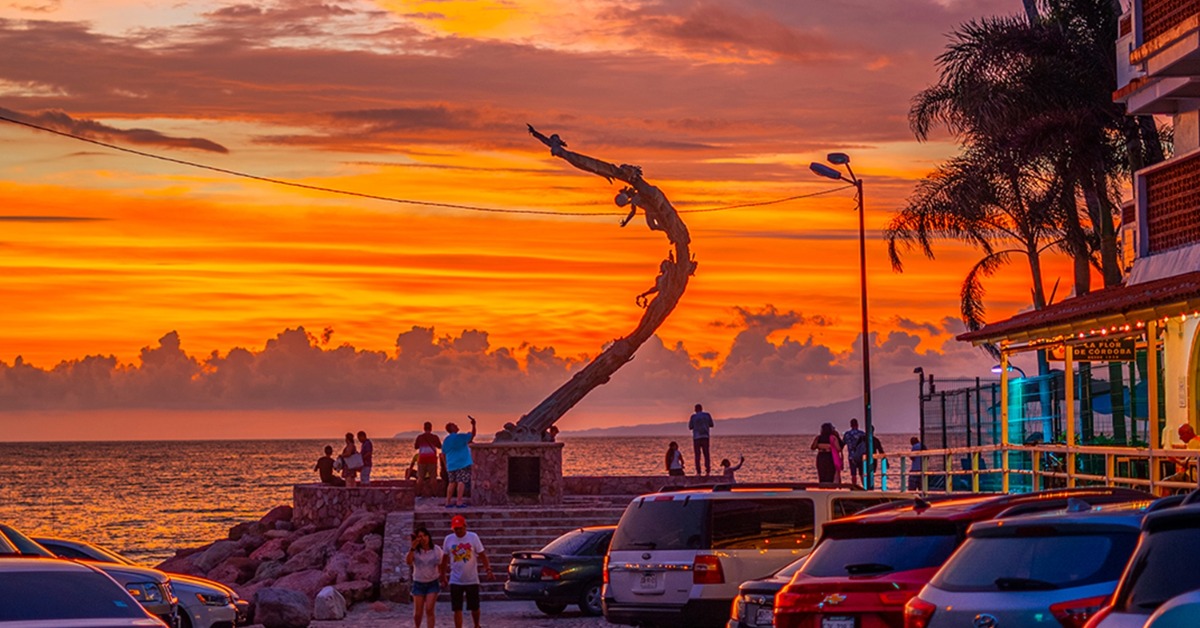
The walk is best around sunset, when the Pacific becomes the backdrop, and the boardwalk fills with people. Families come out for a stroll. Visitors stop for photos. Street performers gather near busy corners. Restaurants and bars begin to fill. Sculptures that may look like simple landmarks during the day take on a different feel in the evening light.
For many international visitors, the Malecón is the first place where Puerto Vallarta feels like more than a beach destination. It is public art, local social life, tourism, nightlife, and oceanfront scenery in one place. That mix is why the city’s official tourism guide describes it as one of Puerto Vallarta’s main gathering points.
A walk through the city’s public living room
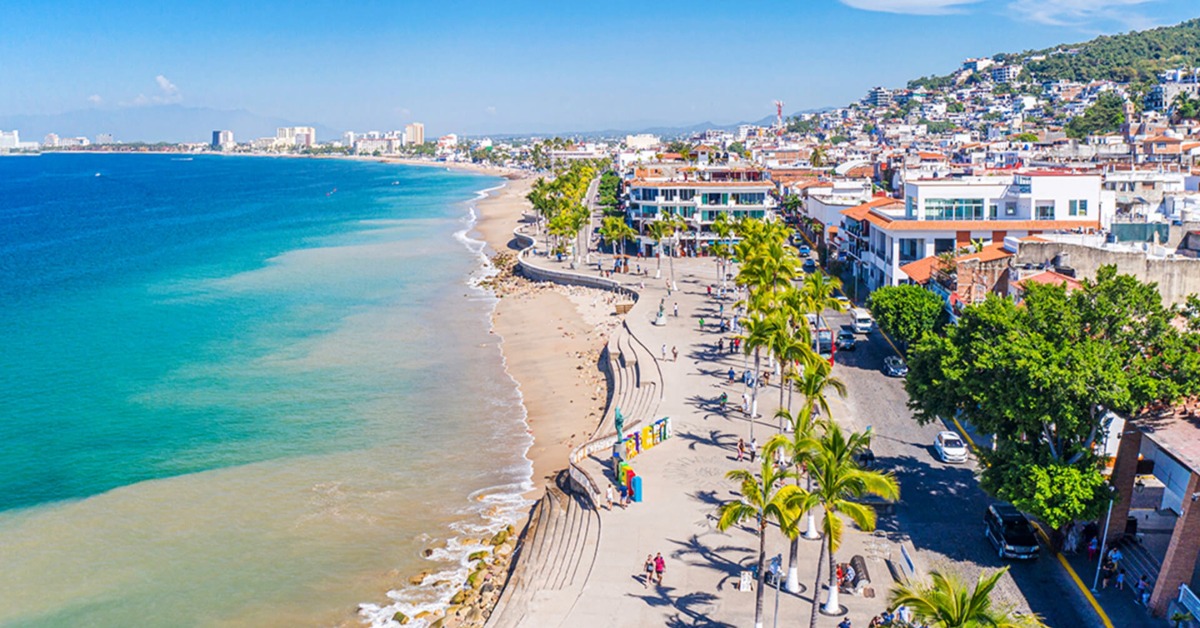
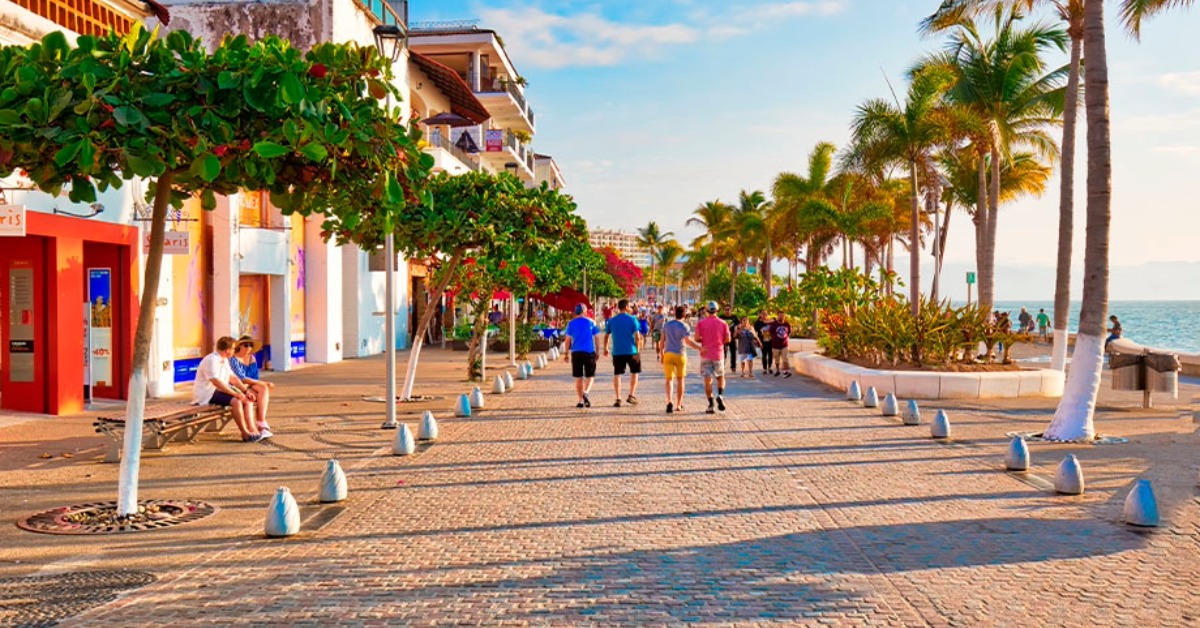
The Malecón runs along the oceanfront in downtown Puerto Vallarta, roughly from the Hotel Rosita area toward the Cuale River. It is not a difficult walk, and that is part of its appeal. The promenade is flat, open, and made for wandering.
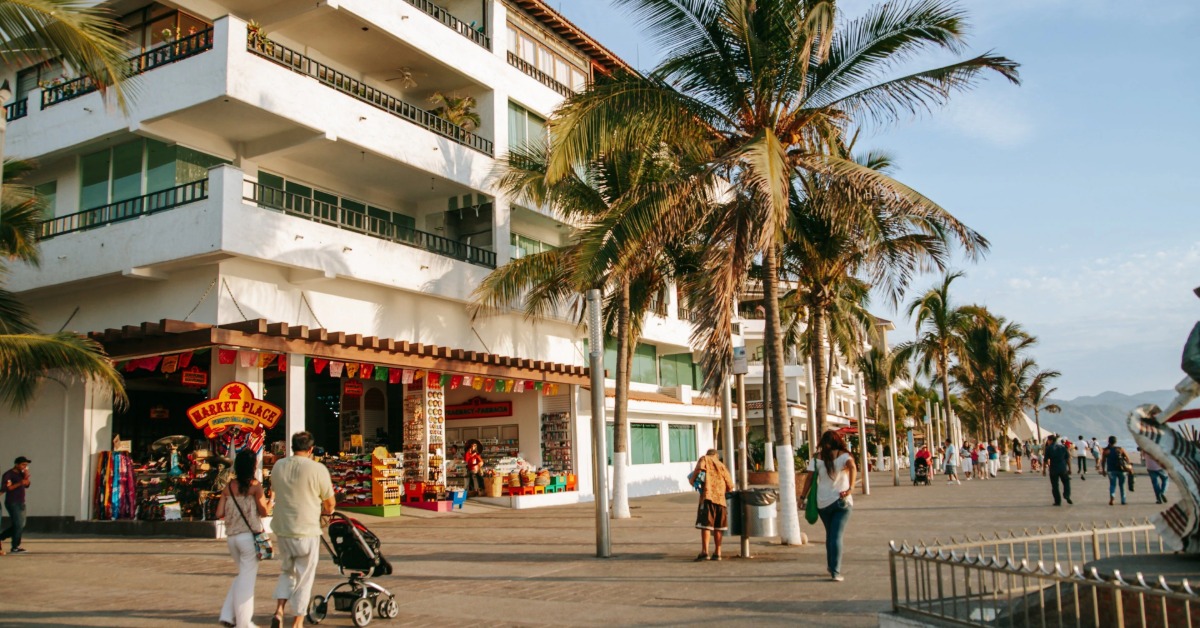
During the day, it works as a sightseeing route. In the evening, it becomes more like the city’s public living room. People stop to talk, watch the sea, listen to music, take photos, or drift toward dinner. It is also one of the few places where tourists, locals, expats, and weekend visitors all move through the same space.
That shared use gives the Malecón its energy. It is polished enough for visitors, but not sealed off from daily life. You may see a family taking photos beside a sculpture, a local musician working for tips, a couple watching the sunset, and tourists choosing a bar for one last drink before dinner.
The walk does not need to be rushed. In fact, rushing it misses the point. The best way to experience the Malecón in Puerto Vallarta is to treat it as a slow evening route rather than a checklist.
Why sunset changes the experience
Puerto Vallarta faces the Pacific, which gives the Malecón its natural advantage. Around sunset, the view becomes part of the attraction. The ocean, sky, palm trees, sculptures, and passing crowds all start to work together.
This is when the promenade is at its most photogenic, but it is also when it feels most alive. The heat drops. The bars and restaurants become more active. Street performers tend to draw larger crowds. The sculptures become gathering points, not just things to look at.
For visitors staying in the Romantic Zone, Cinco de Diciembre, Versalles or Marina Vallarta, the Malecón can be an easy evening plan. It also works well for expats who want something social without committing to a full night out.
A good approach is to arrive before sunset, walk slowly, stop for photos, and then choose a casual bar or restaurant after dark. The timing gives you ocean views first, then the livelier evening atmosphere that follows.
The sculptures are part of the city’s identity
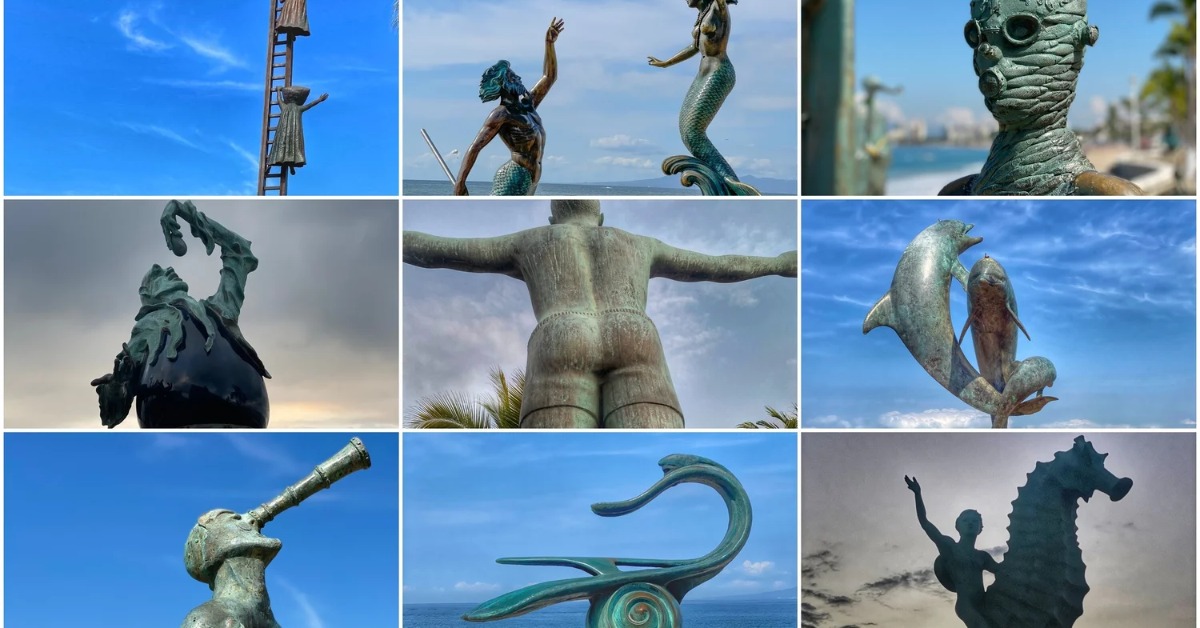
The Malecón sculptures are among the most recognizable features of Puerto Vallarta. They are not hidden inside a museum or placed behind barriers. They sit in public, where people touch them, climb near them, photograph them, and use them as meeting points.
Some works have become city symbols. The Boy on the Seahorse is closely tied to Puerto Vallarta’s image. Nostalgia, by Ramiz Barquet, is one of the works that helped shape the Malecón into an open-air gallery. The Rotunda of the Sea, by Alejandro Colunga, is another major stop, with surreal bronze chairs and sea-inspired forms that invite people to pause.
There is also In Search of Reason, by Sergio Bustamante, with figures climbing a tall ladder. It is one of the most photographed pieces on the boardwalk. Other sculptures, including Millennia, Origin and Destiny, Lluvia, and Triton and Mermaid, add to the route’s public-art character.
For readers new to Puerto Vallarta, this matters because the Malecón is not only a pretty walkway. It is also where the city has placed part of its cultural identity in full public view. The art is accessible, free, and woven into everyday movement.
Street performers and everyday theater
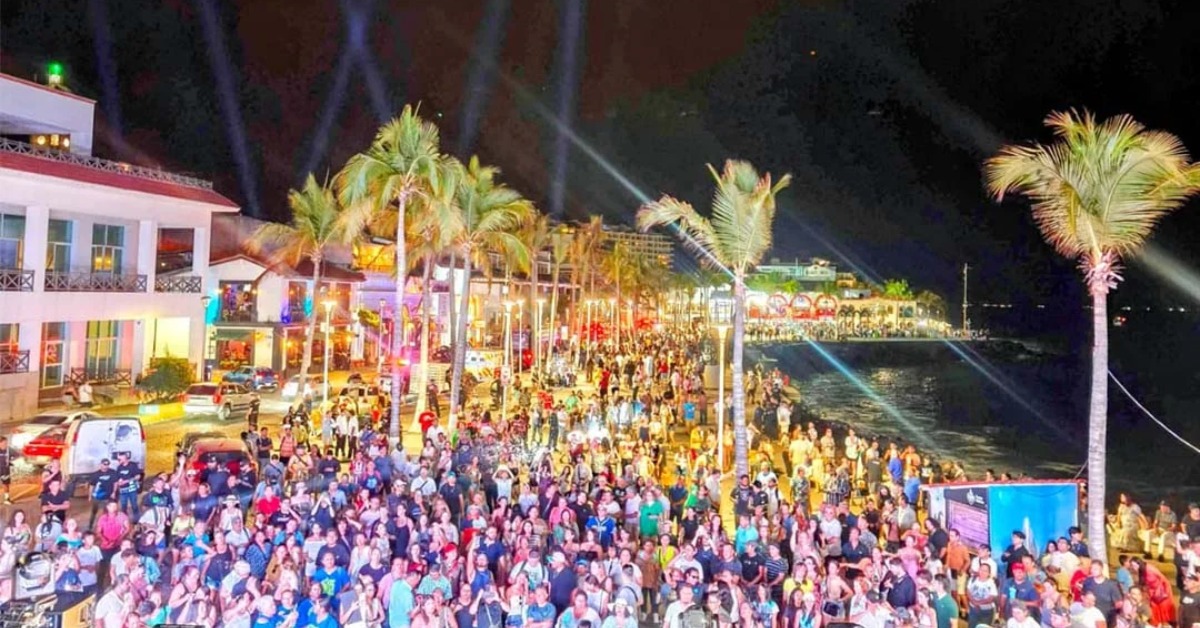
The Malecón also works because it is unpredictable. One evening may bring musicians, living statues, dancers, clowns, fire performers, vendors, or informal shows near busy plazas. Another may feel quieter, with the focus on the sea and the restaurants.
The performances are part of the place’s informal rhythm. They are not always polished, and that is part of the charm. People gather, watch for a few minutes, leave a tip, and move on. The next crowd forms a few steps away.
This is especially useful for visitors who want a low-pressure night out. You can walk without buying anything, then stop only when something catches your attention. You can spend money on dinner and drinks, or keep the evening simple with a snack and a view.
The best advice is to carry small bills and coins. If you stop to watch a performer, leaving a tip is a fair way to support the people who help create the atmosphere.
Bars, restaurants, and casual stops
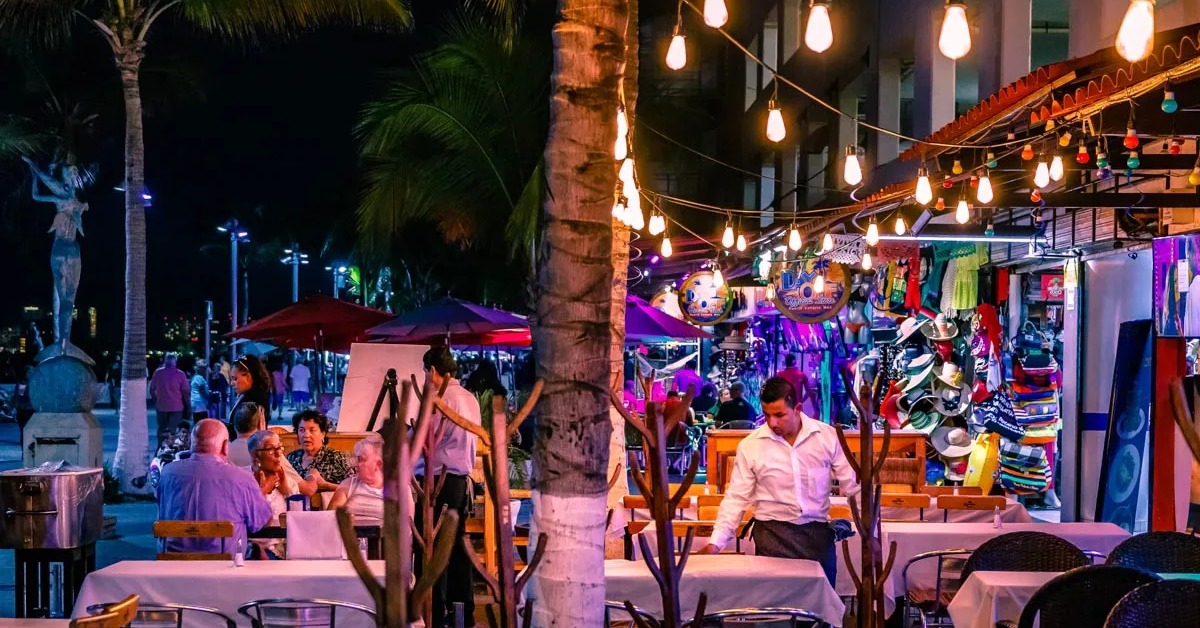
The Malecón is lined with places to eat and drink, from casual bars to restaurants with ocean views. Some are aimed squarely at tourists. Others work well for an easy drink, a quick bite, or a place to rest before continuing the walk.
This is not the place to judge Puerto Vallarta’s entire food scene. Many of the city’s best meals are found a few blocks inland, in neighborhoods where rent is lower, and local dining has more room to breathe. Still, the Malecón has a clear role. It is convenient, scenic, and social.
For a first evening in town, a drink along the boardwalk can make sense. For dinner, some readers may prefer to walk the Malecón first, then head into Centro or the Romantic Zone. That gives you the view without limiting the night to the most obvious waterfront options.
Expats who live in Puerto Vallarta often use the area differently from short-term visitors. They may avoid peak hours, choose quieter weekdays, or use the Malecón as a starting point before going elsewhere. Visitors can learn from that rhythm.
What to watch for as you walk
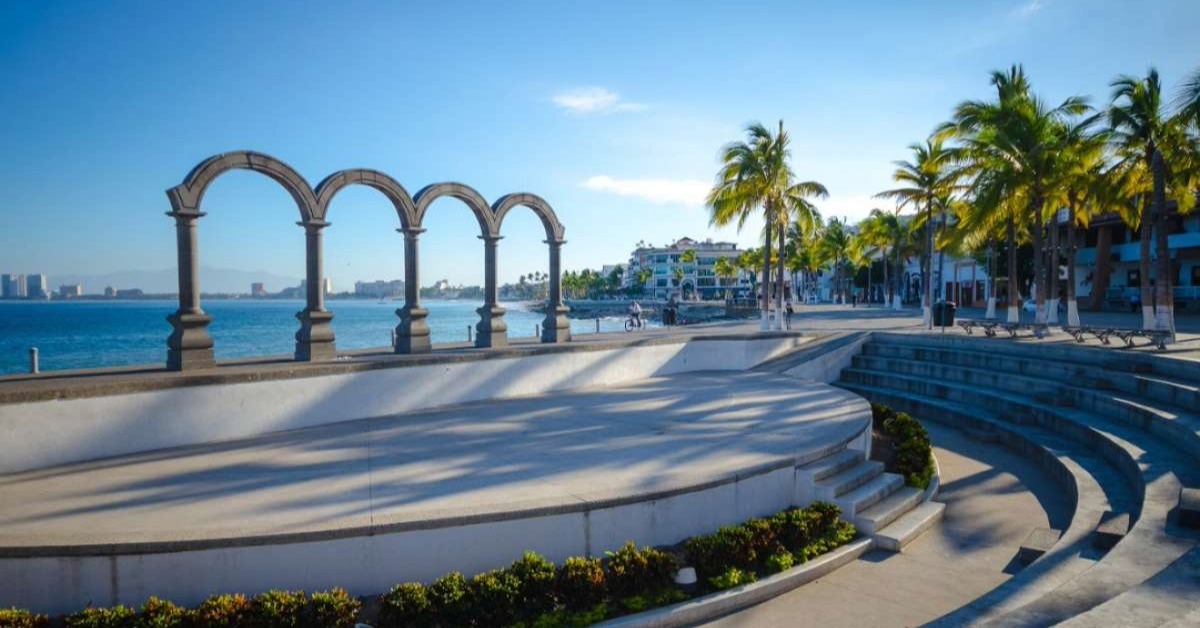
A good Malecón walk starts with attention. Look at the sculptures, but also look beyond them. Notice how the city uses the space. Watch how families gather near the amphitheater. Pay attention to how the side streets draw people toward shops, galleries, and restaurants.
The ocean is always part of the scene, but it should be treated with care. During periods of heavy surf, waves can catch people near seawalls and beach access points by surprise. Red flags and local warnings should be taken seriously. The Malecón is a place to enjoy the sea, not test it.
Footwear also matters. The walk is easy, but sidewalks, crowds, and evening distractions make comfortable shoes a better choice than beach sandals. A bottle of water is useful, especially outside the cooler months.
Petty theft is not the defining feature of the Malecón, but normal city awareness still applies. Keep phones and wallets secure in crowded areas. Do not leave bags unattended at bars or benches. The same common sense used in any busy tourist area applies here.
A simple walking plan
Start near Hotel Rosita or the northern end of the downtown boardwalk. This gives the walk a natural direction and places several major sculptures along the route. Arrive while there is still daylight, especially if you want clear photos of the public art.
Walk slowly toward the central plazas and the Los Arcos amphitheater area. This stretch is often where the Malecón feels most active. Stop at the sculptures, watch the performers, and give yourself time to drift.
As sunset approaches, choose a spot facing the water. Do not worry too much about finding the perfect one. The better approach is to be present before the color begins to change. After sunset, continue toward the Cuale River or turn back toward a bar, restaurant, or side street in Centro.
The whole experience can take less than an hour, but it is better with two. The Malecón is not long, yet it expands when you allow time for stops.
The Malecón is changing, but its role remains
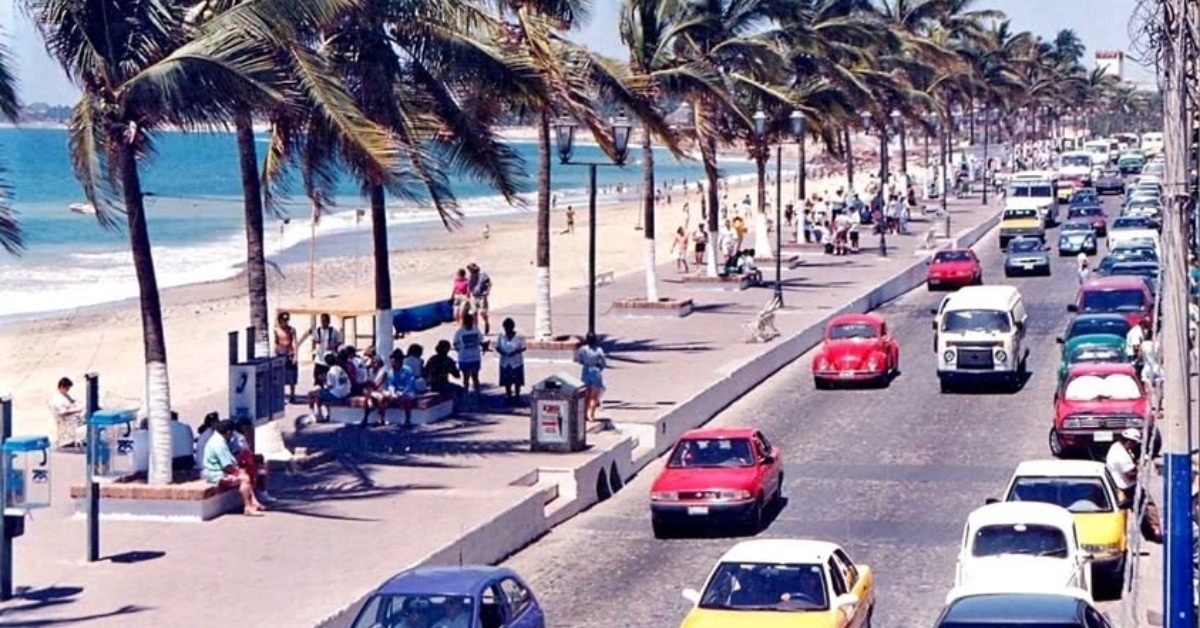
Puerto Vallarta’s Malecón has also been part of recent local debate and public works. Expansion plans, maintenance concerns, traffic discussions, vendor issues, and public-art controversies have all touched the area. That is expected when one public space carries so much of a city’s identity and tourism economy.
For visitors, those debates may not be visible during a sunset walk. For residents, they are part of a larger question about how Puerto Vallarta balances access, tourism, public art, business interests, and local life.
That context should not make the Malecón feel complicated. It should make it feel more real. The promenade is not just a postcard view. It is a working public space in a city that depends heavily on tourism while still trying to protect places locals use.
A sunset walk along the Malecón remains one of the simplest ways to connect with Puerto Vallarta. It is free, central, and easy to repeat. It can be romantic, social, reflective, or casual, depending on the night.
The best version is not the rushed version. Go before sunset. Walk slowly. Look at the art. Watch the performers. Respect the space. Then choose whether the evening ends with a quiet ocean view or a drink somewhere nearby.